
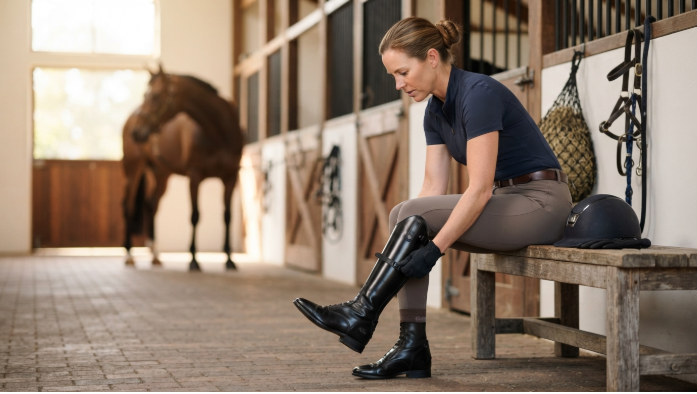
New riding boots may feel firm while the leather softens, but they should not cause significant pain, numbness, excessive pressure or restricted movement. If your boots are uncomfortable around the foot, calf, ankle or knee, assess their fit before assuming that breaking them in will solve the problem.
Riding boots are often among the first pieces of equipment equestrians look for, as they play an essential role in rider safety, comfort, stability and communication with the horse. Selecting the right size is equally important, as poorly fitting boots can restrict movement, cause discomfort and compromise the rider’s balance and confidence in the saddle.
So, riding boots are definitely a significant investment for Australian equestrians, particularly those who train regularly or compete. Yet many riders make the mistake of overlooking uncomfortable pressure points, ordering based solely on shoe size or expecting stiff leather to correct an unsuitable fit.
These mistakes can leave you with expensive footwear that is uncomfortable to wear. Whether you are purchasing your first pair of tall boots or upgrading your existing footwear, this guide explains seven practical checks to help you decide whether to keep, exchange or customise your boots.
Should New Riding Boots Feel Tight?
New riding boots should feel secure and supportive without causing significant discomfort. Leather footwear may initially feel firmer than your previous pair, particularly around the ankle and calf, because the material has not yet softened through regular movement.
However, there is an important difference between firmness and compression. Mild resistance when bending your ankle may be normal, whereas sharp pressure, tingling, numbness or difficulty moving comfortably can indicate that the boot is unsuitable.
Rather than judging the fit by tightness alone, consider how evenly the boot sits against your leg and whether its construction suits your riding discipline.
1. Pain or Excessive Pressure Around the Foot
Riding boots should accommodate your foot without crushing your toes, creating sharp pressure across the instep or excessively squeezing the widest part of your foot.
Start by wearing your usual riding socks and standing on a clean indoor surface. Also, check whether your toes have comfortable room and whether the boot feels evenly supportive when you shift your weight.
Pay particular attention to:
- Pressure across the ball of your foot.
- Toes pressing against the front of the boot.
- Excessive heel movement.
- Discomfort across the instep.
During warmer Australian riding conditions, feet may also swell slightly throughout the day. Therefore, a boot that already feels painfully tight during an initial fitting may become increasingly uncomfortable.
What to do: If your foot is compressed, reassess the foot size, width and shape of the boot rather than expecting the leather to resolve a substantial mismatch.
2. Excessive Pressure Through the Calf
Tall riding boots should sit securely around the calf without restricting circulation or causing significant compression. A close fit helps minimise unnecessary movement, but excessive tightness is not a requirement for effective riding footwear.
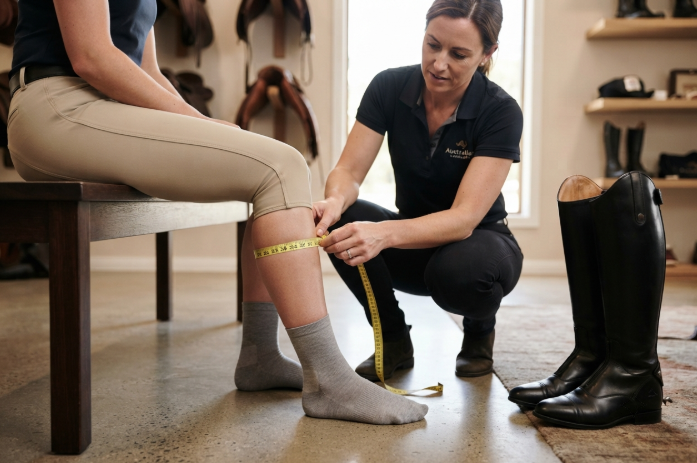
Make sure you measure both calves at their widest point while wearing your normal riding breeches and socks. Your measurements may differ between legs, making it important to record each one separately.
If the foot fits correctly but the calf does not, increasing the entire shoe size could introduce another fitting problem.
What to do: Compare your measurements with the specific manufacturer’s calf-width options. Consider a different calf fitting, boot model or personalised measurement assessment before changing your foot size.
3. Too Much Space Around the Ankle
A loose ankle fit can create excessive folds as the leather settles, potentially causing friction and uncomfortable pressure against the skin. However, the appropriate amount of ankle flexibility depends on the boot’s construction and riding purpose.
When assessing your boots, gently flex your ankles while seated. Observe whether the leather follows your movement or forms large, concentrated folds that press against your leg.
Some creasing is an ordinary feature of leather footwear. Excessive gaping or deep folds, however, deserve further investigation, especially when the calf already fits closely.
What to do: Ask whether another boot shape would better accommodate your ankle and calf proportions. Avoid purchasing a wider boot solely to solve a calf problem if it creates excessive room elsewhere.
4. Incorrect Boot Height Behind the Knee
Tall boots need to accommodate your lower-leg length and allow comfortable knee movement. Although some styles settle at the ankle during breaking in, not every boot shortens by the same amount.
So, first, sit on a chair with your feet resting naturally on the floor. Then, check where the back of each boot sits relative to your knee crease and whether the upper edge creates painful pressure when you bend your leg.
A boot that is already too short is unlikely to improve as the leather settles. Conversely, excessively tall boots may continue interfering with knee movement.
What to do: Compare your leg height with the manufacturer’s recommended measurements and model-specific settling allowance before accepting an uncomfortable fit.
5. Difficulty Closing the Zip
A riding boot zip should close securely without requiring excessive force, while a new boot can feel close-fitting; repeatedly pulling against a heavily strained zip may damage the fastening or surrounding leather.
Also, check that your breeches and socks are sitting smoothly. Fabric folds can contribute to unnecessary pressure, particularly around the ankle and calf.
If the zip becomes difficult to close at the same point each time, identify whether the restriction relates to calf circumference, ankle shape or the boot’s overall construction.
What to do: Stop forcing the zip and seek sizing advice. A different calf measurement or boot design may provide a more suitable fit without placing unnecessary strain on the fastening.
6. Restricted Movement While Seated
Correctly fitted boots should support your riding position while permitting the movement appropriate to your discipline. Although dressage footwear may intentionally have firmer construction, it should not prevent you from maintaining a comfortable and functional leg position.
The best thing you can do is to sit on a stable chair and gently move your ankles within a comfortable range, and then check for pressure behind your knees, pinching around the ankles and excessive resistance when repositioning your feet.
Remember that a boot can feel acceptable while standing but reveal fitting problems when your knees and ankles are bent.
What to do: If movement causes significant discomfort, reassess the fit and intended boot construction before using the footwear in the saddle.
7. Poor Compatibility With Your Stirrups
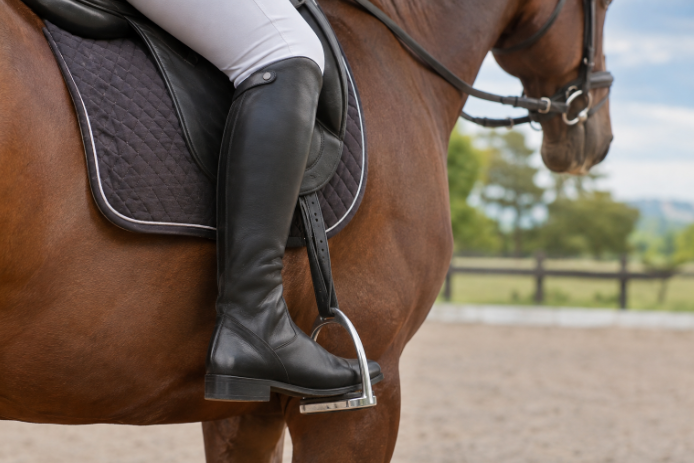
Riding boots must be suitable for the stirrups you use. Footwear that is excessively wide, poorly shaped or equipped with an unsuitable sole may interfere with normal foot placement and release.
Compare the widest relevant section of your boot with the stirrup opening. Also inspect the heel profile and sole construction against the stirrup manufacturer’s recommendations.
Changing footwear can alter this relationship, even if your existing stirrups were correctly selected for your previous boots.
What to do: If compatibility is uncertain, compare suitable stirrups and leathers and seek equipment advice before riding in your new boots.
How Equestrian Riding Boots Change as the Leather Settles
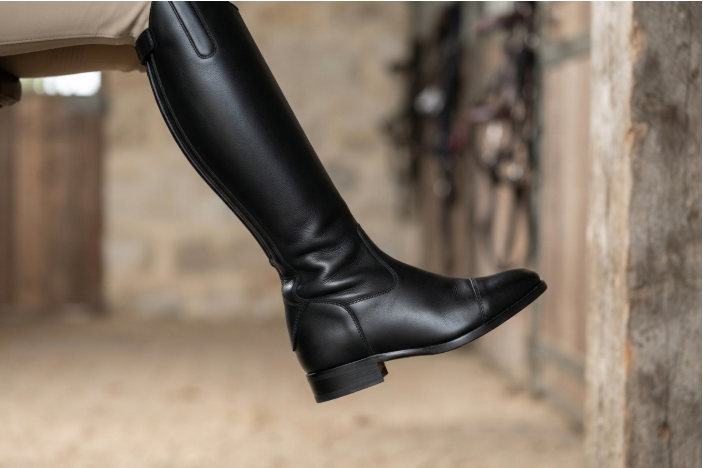
However, breaking in cannot reliably correct an unsuitable foot shape, major calf-width discrepancy or incorrect leg height.
Leather riding boots generally become more flexible in areas that move regularly, particularly around the ankle. Depending on their construction, tall boots may also settle slightly in height.
| Usually changes with wear | Unlikely to be corrected by breaking in |
| General leather firmness | Incorrect foot length |
| Flexibility around the ankle | Substantial calf-width mismatch |
| Minor settling in boot height | Excessive ankle space |
| Ordinary leather creasing | Unsuitable boot construction |
Avoid applying a universal stretching allowance or breaking-in period. Instead, follow the instructions supplied for your specific footwear.
How Your Horse Riding Wear Affects Boot Fit
Your socks and breeches influence the space available inside tall boots. For instance, thicker winter socks or additional clothing layers can make previously comfortable footwear feel noticeably tighter.
This is particularly relevant for Victorian riders who train through changing seasonal conditions. Accordingly, wear your usual horse riding wear when taking measurements rather than measuring over unfamiliar clothing.
If you alternate between tall boots and shorter riding shoes for horse riding, assess each footwear style separately because their fit and movement requirements differ.
Why Boot Construction Matters With a Dressage Saddle
A dressage saddle typically encourages a longer leg position than equipment designed for jumping. Consequently, some dressage boots use firmer construction, while other riding disciplines may favour greater ankle flexibility.
However, greater stiffness does not automatically improve every rider’s position. Your individual proportions, saddle configuration and riding requirements should influence your footwear choice.
If maintaining a comfortable leg position is an ongoing challenge, professional saddle fitting may also help identify whether equipment positioning contributes to the problem.
Should You Keep, Exchange or Custom Order Your Riding Boots?
The right decision depends on whether your discomfort results from ordinary material firmness or a more significant measurement mismatch.
Use the following decision table before committing to further wear.
| Fit issue | Recommended decision |
| Firm leather without significant discomfort | Keep, subject to model-specific fitting guidance |
| Correct foot size but excessive calf pressure | Reassess calf sizing |
| Excessive ankle folds or gaping | Consider an alternative boot shape |
| Painful pressure behind the knee | Recheck boot height |
| Zip requires excessive force | Seek fitting advice before further use |
| Several measurements fall outside standard sizing | Consider custom boots |
For example, a rider whose foot and ankle measurements fit correctly may only need a different calf-width option. Meanwhile, someone with shorter legs, wider calves and narrower ankles may benefit from a more personalised solution.
Custom footwear is not automatically necessary simply because one model feels uncomfortable. However, if repeated sizing attempts produce conflicting results, exploring custom Kingsley riding boots may be worthwhile.
What to Check Before Wearing New Boots Outdoors
Once your boots arrive, assess them indoors according to the retailer’s instructions. This is particularly important when ordering online and when you have been unable to try the specific model beforehand.
Before using or modifying your boots:
- Confirm the size and specifications against your order.
- Try them with your normal riding clothing.
- Record any pressure points or measurement concerns.
- Keep the original packaging and relevant purchase information.
- Check the retailer’s exchange conditions.
- Contact the retailer before applying stretching products or making alterations.
Australian shoppers should also understand that a change-of-mind exchange differs from a remedy available when a product fails to meet a consumer guarantee.
The Australian Competition and Consumer Commission’s guide to consumer rights explains the protections that apply when purchased products do not meet consumer guarantees.
However, do not attempt to permanently alter your boots while a fitting issue remains unresolved.
Frequently Asked Questions
New riding boots may feel firm, but significant pain, numbness or excessive pressure is not something you should ignore. Reassess the fit before continuing to wear uncomfortable boots.
There is no universal break-in period. The time required depends on the leather, boot construction, frequency of wear and initial fit. Follow the manufacturer’s instructions for your particular model.
Some leather riding boots may soften and give slightly around the calf. However, breaking in should not be relied upon to correct a substantial calf-width mismatch or excessive compression.
Tall boots may settle at the ankle as the leather becomes more flexible. The amount varies according to construction, stiffness and design, so check the manufacturer’s guidance before selecting your boot height.
Not necessarily. First, identify whether the restriction occurs around your foot, calf or ankle. A different calf fit, foot width or boot model may be more suitable than increasing your shoe size.
The term equine riding boots can be ambiguous because equine equipment may also include protective boots worn by horses. Equestrian riding boots generally refer to footwear designed for the rider.
Consider custom riding boots when suitable standard models cannot accommodate your individual foot, calf, ankle or leg-height measurements, or when you require specific construction and personalisation options.
Choosing Riding Boots That Fit Your Individual Measurements
Finding the right riding boots involves more than selecting an attractive design or relying on your usual shoe size. Every rider has different proportions, and footwear that suits someone else may not offer the same comfort or functionality for you.
Before making your final decision, distinguish normal leather firmness from genuine fitting problems. Taking the time to assess your measurements and riding requirements can help prevent unnecessary replacements and costly purchasing mistakes.
If you are comparing premium footwear or struggling to find a suitable standard fit, feel free to explore some of the best riding boot collections. Alternatively, you may also get in touch to discuss your measurements and available options before committing to your next pair.