
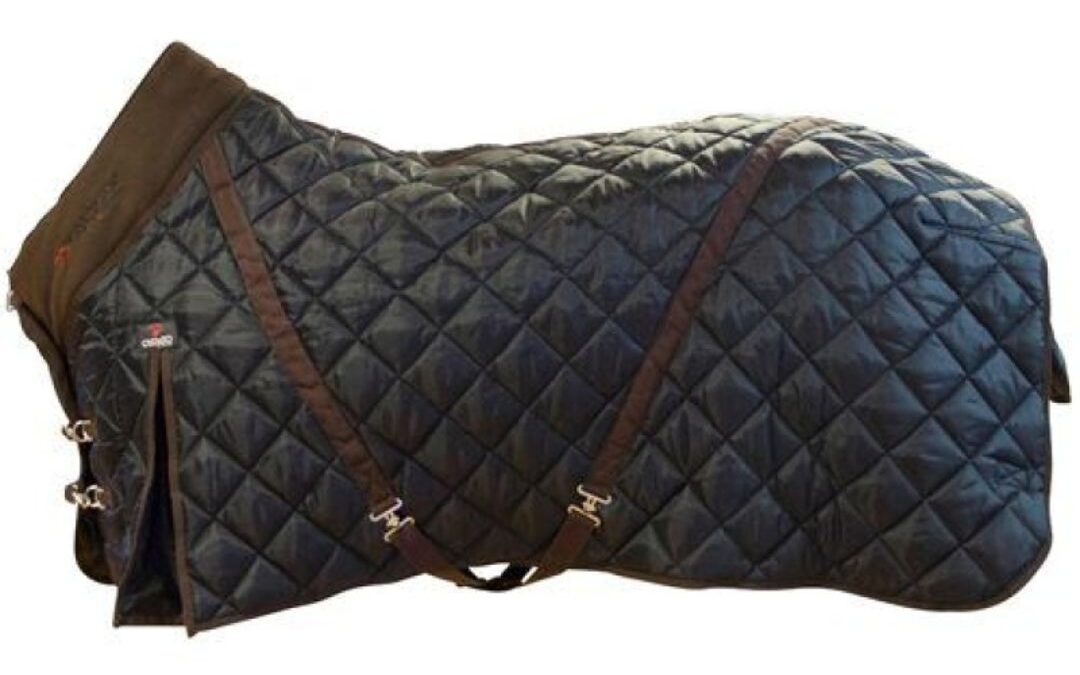
Choosing the right equine horse rugs in Australia is far more complicated than picking a size off a shelf. Australian weather swings wildly between harsh winters in Victoria and frost-free subtropical nights in Queensland. A rug that performs beautifully in one region can overheat or underperform in another. Moreover, fit problems — slipping, rubbing, and pressure sores — are among the most common welfare concerns raised by horse owners across Australia. Getting this right matters for your horse’s comfort, coat condition, and long-term health.
This guide covers everything Australian horse owners genuinely need to know. Topics range from measuring correctly, decoding denier ratings, and matching fill weight to temperature — to fixing slipping rugs, understanding waterproof coatings, and caring for your investment through the seasons. Whether you manage a single backyard horse or a full competition yard, the information below is practical and directly applicable.
How to Measure Your Horse for a Rug in Australia
Accurate measurement is the single most important step when buying equine horse rugs online or in-store. Many sizing problems stem from a rushed measuring process rather than a bad product. Fortunately, measuring correctly takes less than two minutes.
The Standard Measurement Method
- Stand your horse squarely on level ground. Avoid measuring on a slope.
- Place a soft measuring tape at the centre of the chest, at the point of the breast.
- Run the tape horizontally along the side of the body, keeping it parallel to the ground.
- Continue past the shoulder and flank, ending at the centre of the tail.
- Record this measurement in centimetres, but convert it before shopping. While some European imports use centimetre sizing, most major Australian brands and riders use the traditional feet and inches system (e.g., 5’9″, 6’0″, 6’3″).”
- Always cross-reference this measurement against the specific brand’s sizing chart. Sizing is not universal across manufacturers.
Pro Tip
If your horse measures between two sizes, choose the larger option. A slightly generous rug is safer than one that pulls across the shoulders or restricts movement through the chest.
Body Shape Considerations Beyond Length
Length alone does not guarantee fit. Horses vary significantly in depth of chest, width of shoulder, and wither height. Therefore, consider these additional factors alongside your tape measurement.
- High withers: Narrow-withered Thoroughbreds and Warmbloods often need rugs with shaped shoulder gussets to prevent pressure points.
- Broad shoulders: Draught crosses and stocky ponies may need a size up purely for shoulder clearance.
- Short-backed horses: A well-cut rug that sits correctly without overhanging the tail is essential for short-coupled breeds.
If you are unsure about sizing, contact the team at Cheval Sport directly via contact@chevalsport.com.au. The team can help you match your horse’s specific measurements to the right rug size and style.
Understanding Denier in Equine Horse Rugs — and Why It Changes Everything
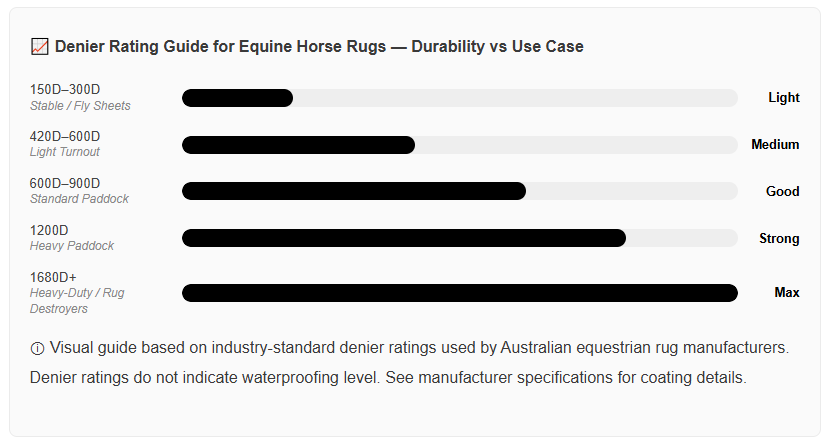
Denier is one of the most misunderstood specifications in horse rug shopping. Simply put, denier measures the thickness of individual fibres in the outer shell fabric. A higher denier number means a thicker, more tightly woven shell — and therefore greater resistance to tears, abrasion, and general wear.
However, denier alone does not determine waterproofing or breathability. Those qualities depend on the coating applied to the fabric, not the fabric weight itself. Understanding this distinction helps you avoid expensive buying mistakes.
Choosing the Right Denier for Australian Conditions
Australian paddock conditions vary enormously. Coastal sandy soils create abrasive surfaces that wear through thin shells quickly. Rocky outback terrain demands maximum durability. Wet Victorian winters punish poor seam construction. Consequently, matching denier to your horse’s environment and personality matters as much as matching it to the season.
True rug destroyers — horses that bite, rub, or tear: Consider 1680D shells or canvas outer options for best longevity.
Easy-going horses in small, well-maintained paddocks: 600D shells are typically sufficient.
Horses that roll frequently, graze aggressively, or share paddocks with other horses: Move up to 1200D for meaningful durability gains.
Verified Fact
According to Wikipedia’s entry on Denier (unit), denier is a unit of measure for the linear mass density of fibres. One denier equals the mass in grams per 9,000 metres of a single fibre. Higher denier fabrics contain more fibre mass, producing heavier and more abrasion-resistant shells.
Seasonal Rugging Across Australian Climates — Getting the Weight Right
Australia’s climate diversity creates genuine rugging complexity. A horse in alpine Victoria faces conditions fundamentally different from one grazing near Darwin. Therefore, following a temperature-based approach rather than a calendar-based approach produces far better outcomes for horse comfort and coat health.
The Clipped Horse Exception
Clipped horses lose the natural insulation provided by a full winter coat. Consequently, they require a fill weight approximately one category heavier than an unclipped horse in the same conditions. A clipped horse at 10°C needs roughly what an unclipped horse needs at 5°C. Always account for wind chill and rain exposure on top of ambient temperature.
If you are competing regularly through Australian winter, explore the range of horse rugs and horse care products at Cheval Sport — including options suited to both stabled and paddock-kept horses in competition preparation.
Over-Rugging — Australia’s Most Common Welfare Mistake
Over-rugging is genuinely common across Australia, particularly among newer horse owners. A horse sweating under a rug on a 15°C day is not warmer and more comfortable — it is stressed, dehydrated, and at risk of skin conditions. Remove rugs on mild days. Trust your horse’s natural thermoregulation. Check your horse’s comfort by feeling the skin at the base of the neck, not the outer surface of the rug.
Combo Rugs vs Turnout Rugs in Australian Conditions — Which One Do You Actually Need?
This is one of the most frequently debated questions on Australian equestrian forums. Both rug types serve outdoor use, but their construction and purpose differ meaningfully. Choosing correctly saves you money and keeps your horse more comfortable through variable weather.
Combo Rug
- Includes an attached or detachable neck cover
- Provides full neck and shoulder warmth
- Best suited to cold, wet, and windy conditions
- Ideal for clipped horses in southern Australian winters
- Reduces the need for a separate neck rug
- Slightly heavier overall than a standard turnout
Standard Turnout Rug
- No neck cover included
- Lighter and easier to put on and remove
- Suits milder Australian winters where neck coverage is unnecessary
- More versatile across temperature ranges
- Can be paired with a separate neck rug when needed
- Usually less expensive than equivalent combo options
For most horse owners managing horses in Victoria, New South Wales, or South Australia through winter, a combo rug with a medium-to-heavy fill provides excellent all-round protection. Owners in Queensland rarely need a combo rug at all — a lightweight turnout with no fill or a rain sheet typically covers most winter nights comfortably.
Buyer Tip
A detachable neck cover offers the best flexibility. It lets you add or remove neck coverage as overnight temperatures shift — particularly useful during the unpredictable shoulder seasons of autumn and spring across much of Australia.
Explore the full range of horse rugs including turnout and combo options at Cheval Sport, curated for Australian climate conditions.
Why Rugs Slip Backwards — and How to Fix the Problem for Good
A rug that slides backward is one of the most common complaints among Australian horse owners. Beyond being frustrating, a slipping rug creates real welfare risks — including pressure sores at the withers, restricted breathing, and injury if a leg becomes caught in a loosened belly strap.
The Real Causes of Rug Slipping
- Incorrect chest strap tension: Chest straps set too loose allow the rug to migrate backward during movement. They should sit snugly but not pull the rug forward.
- Poorly adjusted cross surcingles: Surcingles that are too loose create a pendulum effect — the rug swings with each stride and gradually migrates backward.
- Wrong rug length for the horse’s body: A rug that is too long creates excess fabric across the back, which slides more easily than a well-fitted shell.
- Narrow withers on Thoroughbred types: Without something for the chest straps to work against, rugs tend to shift more. A shaped shoulder gusset helps anchor the rug correctly.
- No leg straps: On horses that gallop or roll frequently, leg straps (hind leg loops) make a meaningful difference to overall rug stability.
Practical Fixes That Actually Work
- Set cross surcingles so a flat hand passes through comfortably, but no more.
- Add a breeching strap or fillet string to prevent backward migration during movement.
- Consider a rug with a shaped anti-slip shoulder panel if your horse is consistently narrow through the front.
- Check that the rug sits squarely and is not twisted before fastening any straps.
Correct horse care and leg protection products can complement a well-fitted rug system. Visit Cheval Sport for further guidance on full horse protection setups.
Rug Rubbing and Bald Patches — Real Causes and Lasting Solutions
Bald patches on the shoulders, mane base, or withers are a tell-tale sign of rug rubbing. This problem frustrates horse owners across Australia, particularly those who have invested in quality rugs and still find their horses developing coat damage. The solution usually lies in fit, not fabric quality.
Where Rubbing Most Commonly Occurs
- Shoulder seam area: The most common rubbing site. Typically caused by a rug that is too narrow across the chest, forcing the shoulder seam to drag across the coat with every stride.
- Wither area: Caused by the rug sitting too low across the withers, creating constant downward pressure. Look for rugs with high wither clearance or a shaped poll piece.
- Mane base and neck: Usually caused by a neck cover that is too tight or a collar that sits too far back, causing friction against the crest.
Solutions Worth Trying
- Switch to a rug with anatomically shaped shoulder gussets. These gussets allow the shell to move with the horse’s shoulder blade rather than dragging against it.
- Use a rug liner or anti-rub vest underneath winter rugs to reduce direct friction against the coat.
- Apply a barrier product such as petroleum jelly to existing bald patches while healing — then address the underlying fit issue.
- Re-measure the horse and compare against the brand’s sizing guide. Sometimes moving up one size resolves shoulder restriction immediately.
If your horse has ongoing coat damage from rug rubbing, speak with a veterinarian or equine physiotherapist. In some cases, underlying muscle soreness causes behavioural changes that make fit problems worse. Also explore leg protection and horse care products that support overall physical comfort alongside correct rugging.
Waterproofing, Washing, and Reproofing Equine Horse Rugs in Australia
A waterproof horse rug that no longer sheds water is a safety problem, not just an inconvenience. A wet horse under a soaked rug loses body heat significantly faster than one without a rug at all. Maintaining waterproof performance through proper washing and regular reproofing is essential — especially in wet regions like the Southern Tablelands, Gippsland, and the Otway Ranges.
How Waterproofing Actually Works
Most modern waterproof turnout rugs use a Durable Water Repellent (DWR) coating applied to the outer shell fabric. This coating causes water to bead and roll off the surface rather than soaking in. Over time, the DWR coating breaks down through washing, UV exposure, abrasion, and general use. When this happens, the outer shell begins to wet out — absorbing moisture rather than repelling it.
Washing Equine Horse Rugs Correctly
- Use a rug-specific or pH-neutral cleaner. Standard laundry detergent contains surfactants that actively strip DWR coatings.
- Wash in cold or warm water — never hot. Heat degrades synthetic fibres and coatings faster.
- For machine washing, use a front-loader on a gentle cycle. Many large turnout rugs require commercial laundry machines.
- Air dry away from direct sunlight. UV exposure accelerates coating degradation.
- Do not tumble dry unless the manufacturer explicitly permits it.
Reproofing — When and How
- Reproof at the start of each wet season — or whenever you notice water no longer beads on the outer shell.
- Use a rug-specific spray-on or wash-in DWR reproofing product. Do not use household fabric waterproofers — they are not formulated for the stress levels horse rugs endure.
- Apply evenly to a clean, dry rug and allow full cure time before returning the rug to use.
Good rug maintenance extends product life significantly and protects your investment. Browse the leather care and horse care range at Cheval Sport for quality maintenance products that keep your gear performing season after season.
Canvas vs Ripstop vs Synthetic Shells — Choosing the Right Outer Material
Australia has a rich tradition of canvas rug use — and for good reason. However, modern synthetic alternatives have changed what horse owners can reasonably expect from a paddock rug. Understanding the practical differences helps you make a confident decision based on your horse’s environment.
Canvas Rugs
- Woven cotton-blend fabric — breathes naturally
- Traditionally used across Australian pastoral properties
- Excellent for dry climates — wicks moisture without trapping heat
- Heavier than synthetic alternatives
- Requires periodic re-proofing with canvas-specific products
- Prone to mould if stored damp
- Very durable under abrasion when cared for correctly
Ripstop / Synthetic Shells
- Grid-reinforced synthetic weave — resists tearing under load
- Lighter weight than canvas — easier handling
- Excellent waterproofing when DWR coating is maintained
- Available in denier ratings from 150D to 1680D
- Dries faster than canvas after rain exposure
- Wide range of fill weights available in this shell type
- Suits wet coastal and southern Australian climates well
For most Australian horse owners in wet or variable climates, a ripstop synthetic rug with a quality DWR coating and appropriate fill weight offers the most practical all-round solution. Canvas remains an excellent option for drier inland regions or horses that consistently rub through synthetic shells.
More Equestrian Gear Worth Exploring at Cheval Sport
Getting your horse’s rug right is one piece of a larger comfort and performance picture. Additionally, the right saddle fit, correct leg protection, and quality leather care all contribute to a horse that performs and feels its best. Cheval Sport carries a full range of equestrian essentials, all sourced with Australian conditions in mind.
- Saddles and Saddle Pads — properly fitted saddle pads protect the horse’s back and complement rug use during stabling.
- Bridles and Reins — quality leather bridle components for everyday riding and competition preparation.
- Leg Protection — boots and bandages that work alongside your rugging system to keep horses comfortable in paddock and stable environments.
- Leather Care Products — cleaning and conditioning products that extend the life of bridles, reins, girths, and leather saddle components.
- Rider Accessories — helmets, gloves, and rider gear suited to Australian conditions and disciplines.
Frequently Asked Questions About Equine Horse Rugs in Australia
How do I know what size rug my horse needs?
Measure from the centre of the chest to the tail along the body in centimetres, then convert that figure to feet and inches. This converted number corresponds to standard Australian rug sizing charts (such as 5’9″, 6’0″, or 6’3″). Always cross-reference with the specific brand’s chart, as sizing varies between manufacturers.
Why does my horse’s rug keep slipping backwards?
A rug slips when chest straps are too loose or the surcingle system is poorly adjusted. Check cross surcingles fit snugly below the belly. A correctly fitted rug should not shift during normal movement or rolling.
Is it bad to over-rug a horse in Australia?
Yes. Over-rugging raises body temperature uncomfortably, causing sweating, dehydration, and skin conditions. Australian summers are particularly unforgiving. Match rug weight to overnight temperatures rather than daytime conditions.
What’s the difference between a canvas rug and a ripstop rug?
Canvas rugs are cotton-blend fabrics that breathe well, suiting dry Australian conditions. Ripstop rugs use a grid-reinforced synthetic weave that resists tearing. Ripstop is lighter and more waterproof, while canvas is more breathable and traditional.
Can I leave a rug on a horse 24/7?
Remove rugs daily to check the horse’s coat, skin, and weight. Leaving a rug on without inspection can mask weight loss, pressure sores, and skin infections. Check and refit at minimum every 24 hours.
How many grams fill does my horse need for winter?
A 100g fill suits mild nights above 10°C. A 200–250g fill suits 5–10°C temperatures. A 300–400g fill suits below 5°C or clipped horses during southern Australian winters.
Why is my horse rubbing bald patches under his rug?
Bald patches appear at the shoulders or withers when a rug is too narrow, the lining is rough, or the rug sits unevenly. Check shoulder seam clearance and consider a rug with anatomically shaped shoulder gussets and a mane-safe collar.
Should I rug a clipped horse in summer?
A freshly clipped horse may need a lightweight cotton sheet or fly rug on cooler nights, even in summer. In warm Australian summers, a fly rug or UV protection sheet is usually more appropriate than a fill rug.
What’s the difference between a rain sheet and a combo rug?
A rain sheet is a lightweight waterproof cover with no fill, designed only to repel rain. A combo rug includes an attached neck cover that provides extra warmth and weather protection during cold or wet Australian conditions.
How often should I wash and reproof a horse rug?
Wash horse rugs at least once per season or when visibly soiled. Reproof waterproof rugs annually using a rug-specific DWR reproofing product. Never use standard laundry detergent, as it strips waterproof coatings.
What denier rating is best for a paddock rug?
For paddock use, a minimum of 600D suits easy-going horses. Horses that roll frequently or live in rough paddocks benefit from 1200D or higher for superior tear and abrasion resistance.
Do horses need rugs in Queensland summers?
Most Queensland horses need no fill rug in summer. A fly rug or UV-protective sheet helps reduce insect irritation, sunburn on pink-skinned horses, and summer itch caused by Culicoides midges in tropical and subtropical regions.
How do I stop my horse’s rug from rubbing his mane?
Mane rubbing is usually caused by a neck collar that sits too far back or applies uneven pressure. Try a rug with a lycra-lined neck collar, or fit a mane-saver or neoprene neck guard underneath the neck cover. Ensure the collar is not too tight.
Can I use a horse rug on a pony?
Standard Australian horse rug sizing charts usually start at 3’9″ or 4’0″, covering most miniature horses and small ponies. However, pony builds differ from horses — particularly in neck width and back length. Use a pony-specific rug where available, or choose a brand that offers narrow-fit options for smaller equines.
Final Thoughts on Equine Horse Rugs in Australia
Getting equine horse rugs right in Australia takes more than guessing a size. It demands accurate measurement, an understanding of denier and fill weight, honest assessment of your horse’s environment, and consistent maintenance. Moreover, it requires daily checks — because a horse’s comfort changes with the weather, the season, and the condition of the rug itself.
The common thread across every slipping, rubbing, or over-heating rug problem is this: fit and function must work together. A premium rug on a poorly measured horse will still cause problems. Equally, a correctly sized rug with a stripped waterproof coating will fail in the first decent storm of a Victorian winter.
Start with accurate measurement. Match fill weight to overnight temperatures rather than seasons. Choose a denier appropriate to your horse’s paddock behaviour. Maintain waterproof coatings annually. And remove rugs daily to check what’s happening underneath.
At Cheval Sport, the full product range — from horse rugs and saddle pads to leg protection and rider accessories — is curated for Australian conditions and Australian horses. Whether you are setting up a young horse for its first winter or upgrading a competition horse’s gear wardrobe, the team at Cheval Sport can help you get it right the first time.