
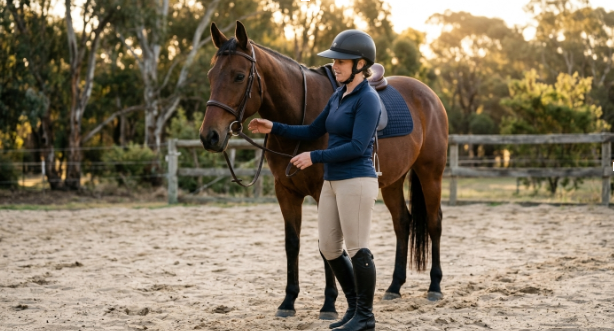
Your first week around horses teaches you something quickly: the right horse riding gear has less to do with looking the part and more to do with staying balanced, safe and comfortable on a half-tonne animal that can change its mind in a heartbeat. For a beginner jockey, the shop shelves can look like a maze of leather, buckles and unfamiliar names, and it is easy to spend money on the wrong thing first.
This guide cuts through the noise. It ranks ten essentials by what a new rider genuinely needs, adds a quick fit check for each, and keeps Australian conditions in mind: fierce UV, dusty arenas and riding schools that range from city rings to country paddocks. The result is a shortlist you can shop from with confidence rather than guesswork.
Beginner horse riding gear checklist (quick answer)
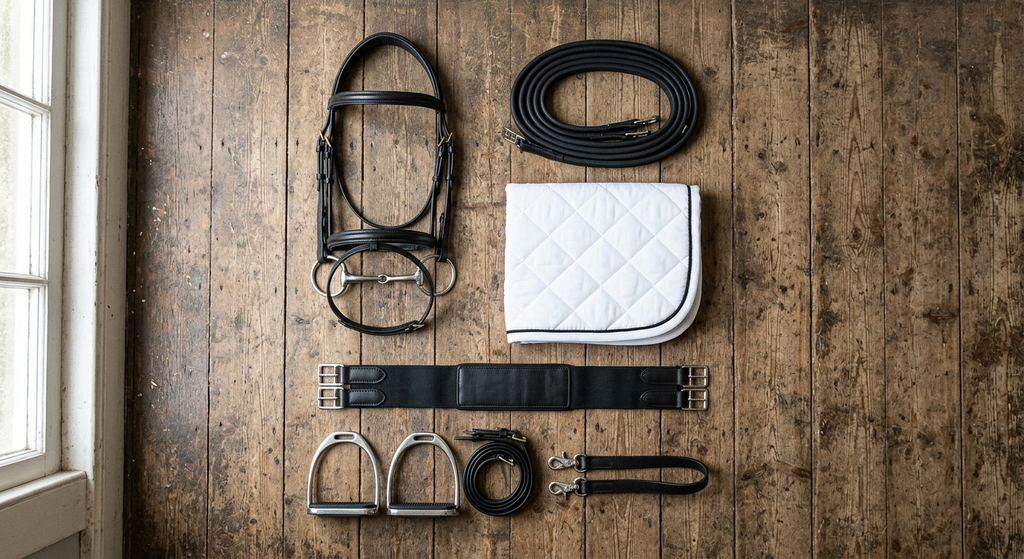
A certified equestrian helmet comes before everything else. After that, the top 10 horse riding gear items for a beginner jockey are, in buying order:
- Horse rug: Weather protection and comfort suited to your horse’s needs & season
- Helmet sun visor: Shade for your eyes and face.
- Equestrian riding boots: A defined heel and smooth sole.
- Stirrups and stirrup leathers: Secure, adjustable footing.
- Horse saddle: Professionally fitted and bought last.
- Saddle pads: Comfort and sweat control under the saddle.
- Girth: The strap that keeps everything in place.
- Horse bridle: A well-fitted line of communication.
- Grip reins: Steadier hands and calmer contact.
- Monkey strap: A balance aid for wobbly moments.
Who counts as a beginner jockey?
Strictly speaking, a jockey is a professional race rider, and track work follows the rules set by a trainer or racing body. In everyday searches, though, “beginner jockey” usually means someone new to riding who is heading into lessons, trail rides, or arena work. That rider is who this list is written for. If a racing career is your goal, ask your trainer for their equipment specifications before you buy anything.
Top 10 horse riding gear for a beginner jockey, in buying order
- Horse Rug
A horse rug is an important addition to your horse-care essentials, helping protect your horse from changing weather conditions, rain, cold, and insects. The right rug depends on your horse’s environment, coat, activity level and seasonal requirements. Beginners should understand the difference between turnout rugs, stable rugs, summer sheets and winter rugs before choosing one. A well-selected rug should offer protection without restricting natural movement or causing unnecessary overheating.
Fit check: Measure your horse from the centre of the chest to the centre of the tail and compare the measurement with the manufacturer’s sizing chart. When fitted, the rug should sit comfortably around the chest and shoulders, provide sufficient clearance around the withers, and allow free movement without rubbing. Check that the belly straps allow approximately a hand’s width of clearance and that leg straps are secure without hanging too loosely.
Explore our horse rug collection to find options suited to your horse’s unique needs and seasonal requirements.
- Helmet sun visor
No item here matters more than a certified equestrian helmet, so sort that first. Read the label inside for the standard your riding school or organisation accepts, and never swap in a bicycle helmet. Once your helmet fits, a visor that slips over it adds shade where Australian summers hit hardest.
Before long rides, look up the sun protection times on the Bureau of Meteorology UV page, because protection is recommended whenever the UV Index reaches 3 or above.
Fit check: The visor should sit firmly without tilting your helmet or blocking your view of your hands.
You may love to check out our equestrian helmet guide, which explains the checks in detail, or browse rider accessories to explore more options.
- Equestrian riding boots
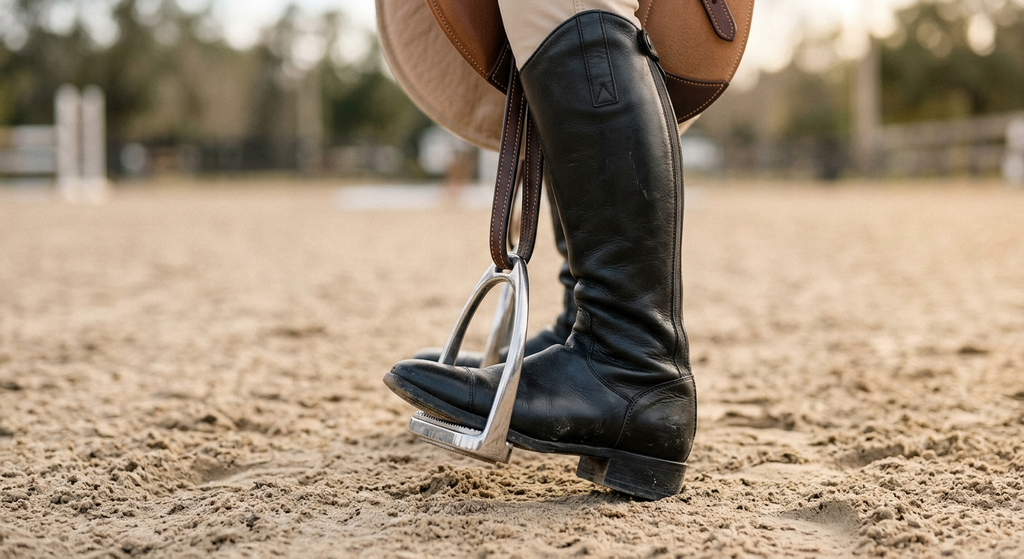
The secret weapon of good equestrian riding boots is the heel. A defined heel and smooth sole stop your foot sliding through the stirrup, which is why instructors turn runners away at the gate. Tall boots hug the lower leg and look sharp; shorter paddock-style boots are easier for yard chores. Either way, avoid chunky work-boot treads that can grip the stirrup.
Fit check: You should walk comfortably, flex your ankle freely, and drop your heel without pinching at the calf. Our equestrian riding boots guide covers calf and leg-height measuring, and you may also compare styles in the riding boot range.
- Stirrups and stirrup leathers
Stirrups give your seat a platform, and stirrup leathers hold them at the right height, so both deserve more attention than they usually get. Choose stirrups wide enough to leave a small gap either side of your boot, and look for designs with safety features that help your foot release in a fall. Leathers should be sturdy, evenly stretched, and easy to adjust.
Fit check: With your feet out, the base of each stirrup should hang close to your ankle bone. Inspect stitching and holes before every ride, because worn leathers are an avoidable hazard. See the full range of stirrups and stirrup leathers.
- Horse saddle
A horse saddle is the priciest item on this list, and the one beginners should buy last. Until you ride one horse regularly, lesson saddles do the job. When you do shop, remember a saddle has two clients: the horse’s back and your seat. One that pinches the horse produces a tense, short-striding ride, however comfortable it feels to you.
Fit check: Book a professional assessment, because horses change shape with fitness and season, and a saddle that suited last year may not suit today. Also, you may explore saddles once you have a horse in mind.
- Saddle pads
Saddle pads sit between the saddle and the horse, soaking up sweat and adding a layer of cushioning. A pad can improve comfort, but it cannot rescue a saddle that does not suit the horse’s back, so treat it as support, not a repair. Beginners do best with a simple, breathable pad that lies flat; thick padding can lift the saddle and unsettle your balance.
Fit check: The pad should extend slightly beyond the saddle and sit smoothly, with no bunching. Wash it often in warm weather. Meanwhile, you may also compare saddle pads and check out our saddle pad guide for in-depth knowledge.
- Girth
The girth is the strap that holds your saddle on, so a worn or poorly shaped one is a genuine safety risk. Choose a girth that suits your saddle’s billets and has a smooth, contoured shape behind the horse’s elbows; some include elastic panels for extra give.
Fit check: Tighten gradually, recheck after you mount, then again after a few minutes of walking, once the horse relaxes and the saddle settles. Feel free to browse girths in a range of lengths.
- Horse bridle
A horse bridle is your steering and your conversation with the horse, so fit matters more than looks. The browband must not press on the ears, the noseband should leave room for comfortable chewing, and the bit should rest at the corners of the mouth with one or two soft wrinkles. Beginners are best served by a simple snaffle-style bridle, the type used for most everyday riding.
Fit check: slide two fingers under the noseband and ask your instructor to confirm bit height the first time. Our horse bridle guide goes deeper, and you may also shop the bridle collection.
- Grip reins
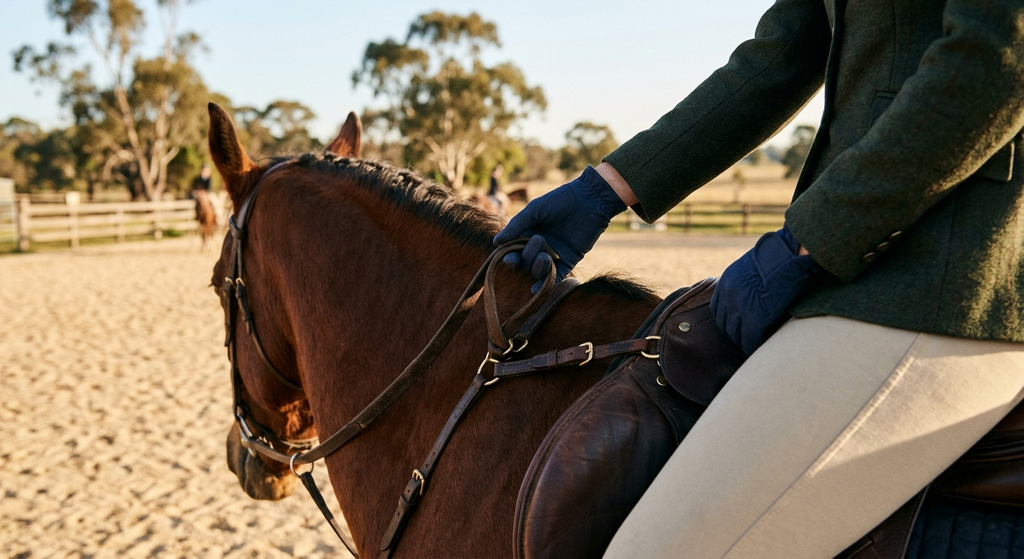
Reins are the one piece of horse riding gear your hands hold constantly, so slippery or stiff ones magnify every beginner wobble. Reins with built-in grips or stops help new riders keep even spacing and stop their hands creeping forward. Leather feels classic; rubberised and synthetic styles are easier to hold when sweaty or wet.
Fit check: Pick a width your closed hand holds comfortably, and a length that never loops down near your boots.
- Monkey strap
A monkey strap, also called a balance strap, clips to the D-rings at the front of the saddle and gives you something to hold when your balance slips. You grab the strap instead of snatching the reins, which spares the horse’s mouth. Think of it as training wheels for the first months of trotting and cantering, not a steering aid.
Fit check: It should hang loose enough to grip without drooping into your lap, with both clips fastened securely before every ride.
Summary table: what to buy now, later, and when you own a horse
| Gear | When to buy | Quick check |
| Horse rug | When needed for seasonal protection | Correct chest, shoulder, and wither fit; secure straps |
| Helmet sun visor | Now | Stable, clear view |
| Equestrian riding boots | Now | Heel and smooth sole |
| Stirrups and leathers | With your own horse | Gap beside boot; sound stitching |
| Horse saddle | Last | Professional fit assessment |
| Saddle pads | With your own horse | Flat, no bunching |
| Girth | With your own horse | Recheck after mounting |
| Horse bridle | With your own horse | Two fingers under noseband |
| Grip reins | Early, if you ride often | Comfortable grip and length |
| Monkey strap | Early, if confidence is low | Secure clips |
How to buy horse riding gear without wasting money
Start with lessons and borrow what the school provides, but ask first about its helmet and boot policy. Spend your first dollars on what touches you: helmet, boots, then your contact points. Save saddlery for when you know the horse, because the right size of saddle, girth, and bridle depends on that animal’s shape, not yours.
A few weeks of lessons will also show you whether you prefer arena work or trail riding, and that choice shapes what you buy next. Everyday horse riding wear, including clothing layers, is a separate shopping list, which our horse riding wear guide covers. Whatever you order online, read the return and exchange policy before you pay.
Beginner horse riding gear FAQs
A certified equestrian helmet, riding boots with a heel, and clothing you can move in cover your first lessons. Saddlery such as the saddle, pad, girth, bridle, and reins comes later, once you ride one horse regularly.
The equestrian helmet. It is the single item that protects your head, so check the label for an accepted standard, fit it carefully, and replace it after any significant impact.
No. Lesson horses arrive tacked up. Buy a saddle only when you lease or own a horse, and have it professionally assessed so it suits both horse and rider.
Either works if it has a defined heel and smooth sole. Paddock-style boots are easier for yard work, while tall boots offer extra lower-leg support.
No. Runners lack a heel, so your foot can slide through the stirrup, and chunky work-boot treads can catch. Wear boots designed for riding.
A monkey strap attaches to the saddle’s D-rings and gives you something to hold for balance. It stops you from grabbing the reins when you wobble.
Inspect it before every ride. Look at stitching, buckles, and leather, and replace anything cracked, thin, or frayed rather than risking a failure mid-ride.
Ready to choose your first pieces?
Choosing horse riding gear is easier with a second pair of eyes. If you would like help with boots, stirrups, or a saddle assessment, Cheval Sport offers saddle fitting advice and personalised product recommendations for riders at every level. Browse the saddlery range at your own pace, or send a question through the contact page, and start your first season in gear that fits.