
Choosing the right pair of horse riding boots is one of the most important decisions any rider makes — whether you are stepping into the saddle for the very first time at a Melbourne riding school or preparing for a dressage competition somewhere in regional Victoria. The wrong footwear is not just uncomfortable; it is a genuine safety risk. The right pair, on the other hand, supports your leg position, protects your foot and ankle, and gives you the confidence to ride well. From tall leather dressage boots to practical short paddock boots, there is a style, a fit, and a price point for every rider and every discipline across Australia.
At Cheval Sport, based in Yan Yean, Victoria, the focus has always been on helping riders find equestrian footwear and gear that genuinely works — not just for the arena, but for the long hours, varied terrain, and unpredictable Australian climate that comes with serious horse ownership. This guide covers everything you need to make a confident, well-informed choice.
Why Your Choice of Riding Boot Matters More Than You Think
It is easy to underestimate how much footwear influences your riding. A purpose-built riding boot is not simply cosmetic — it is functional safety equipment. Equestrian Australia and riding clubs across Victoria strongly advise riders to use proper equine riding boots rather than repurposed general footwear, particularly for lessons, trail riding, and any competitive work.
The defining features of a purpose-built equestrian riding boot include:
- A clearly defined heel of at least 2.5 cm to prevent the foot from sliding through the stirrup
- A smooth or very lightly textured sole that releases cleanly from the iron in the event of a fall
- A firm but flexible sole that allows the rider to feel and communicate through the stirrup
- Adequate ankle and calf support for stability in the saddle
- A fit close enough to the calf and ankle to allow precise leg aids without restrictive bulk
None of these features appear consistently in standard work boots, fashion boots, or hiking footwear. Getting the foundation right — starting with the right boot — sets everything else in your riding up for success.
Tall Riding Boots vs Short Paddock Boots: Which Is Right for You?
The debate between tall and short boots is one of the most common conversations in any Australian tack room. Both types serve a genuine purpose, and the right answer depends on your riding discipline, your budget, and how frequently you ride.
Tall Riding Boots
Tall boots extend from the foot to just below the knee, providing the cleanest possible leg contact with the horse. This is why they are the standard choice for dressage, show jumping, eventing, and formal competition at every level. In dressage, a tall black leather boot is not optional — it is a competition requirement.
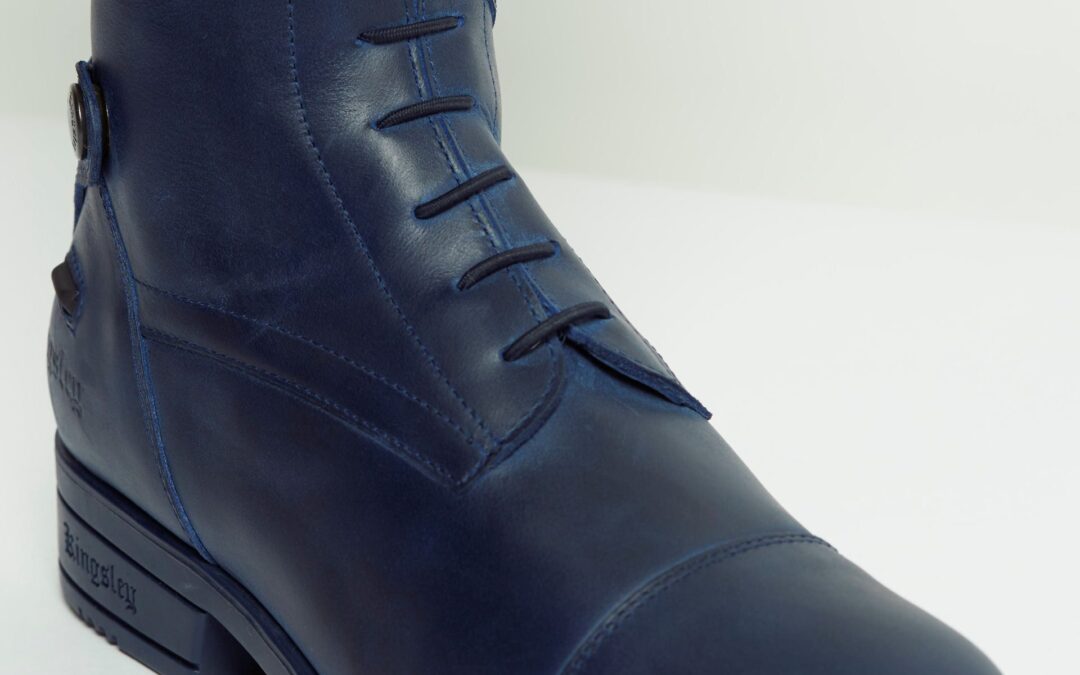
The investment in a quality tall boot pays off over years of riding. Premium leather options such as Kingsley Boots, available through Cheval Sport, are hand-crafted from European leather and built to last with proper care. The Custom Kingsley Riding Boot range takes this further — each boot is measured to your exact calf, ankle, and foot dimensions, eliminating the fit compromises common with off-the-shelf sizing.
Short Paddock Boots and Half-Chaps
Short ankle boots — commonly called paddock boots — are the practical starting point for beginners and an excellent everyday option for trail riders, instructors, and stable workers. They are easier to get on and off, significantly less expensive, and far more versatile around the yard.
Pairing a paddock boot with a quality set of half-chaps gives you the leg coverage and grip of a tall boot at a fraction of the cost. This is a popular combination for junior riders and adults returning to the saddle after a break, and is widely used across riding schools in Melbourne and regional Victoria.
| Feature | Tall Riding Boots | Short Paddock Boots |
|---|---|---|
| Leg support | Full calf and ankle | Ankle only |
| Best for | Dressage, jumping, competition | Trail, lessons, yard work |
| Ease of use | Requires boot pulls or zippers | Quick on and off |
| Formality | Competition-ready | Casual to semi-formal |
| Cost range | Mid to premium | Entry to mid-range |
| Customisation | Available — e.g. Kingsley Custom | Standard sizing only |
Horse Riding Boots by Discipline: Matching Your Boot to How You Ride
Australian riders compete and train across a wide range of disciplines, and boot requirements vary meaningfully between them. Understanding what your discipline demands will help you make the right investment from the start — and avoid buying a boot that simply does not suit your style of riding.
Dressage
Dressage demands precision, and the boot reflects that. A tall, black leather boot with a firm shaft, minimal sole texture, and a close fit through the calf is the standard. The boot should allow clear, subtle leg communication without bulk or gap. Brands such as Kingsley, Bliss of London, and Aviar — all available through Cheval Sport — are well respected in the Australian dressage community for exactly these qualities.
Pairing your dressage boots with a correctly fitted dressage saddle from makers like Frank Baines, Stubben, or Kieffer completes the foundation for serious high-performance training. The connection between the boot and the saddle — and how each positions the rider — is something experienced coaches and fitters pay close attention to.
Show Jumping
Field boots with lacing at the ankle are the traditional show jumping standard. They allow slightly more ankle flexibility than a pure dressage boot, which suits the dynamic movement required during jumping phases. Brown leather field boots are also commonly seen in jumping alongside the traditional black. A well-fitted saddlery setup from brands like Envy and Custom Saddlery, available through Cheval Sport, rounds out a complete jumping kit.
Eventing
Eventers need real versatility — a boot that holds up across dressage phases, cross-country, and show jumping in a single competition day. Many eventers settle on a quality tall boot that handles multiple phases well, supplemented by appropriate safety gear: a certified equestrian helmet and a body protector are non-negotiable for cross-country work. Safety standards evolve regularly, so checking current Equestrian Australia guidelines before purchasing protective gear is always worthwhile.
Trail and Recreational Riding
For recreational and trail riding across Victoria’s varied landscapes — from the Dandenong Ranges to the High Country — a paddock boot or short riding boot with a durable outsole and good ankle support is entirely appropriate. Comfort over long hours in the saddle is the priority here, making fit even more critical than in a shorter arena session.
What to Look for When Buying Horse Riding Boots in Australia
Purchasing equestrian footwear involves more than choosing a style you like. A boot that fits incorrectly can create painful pressure points, restrict circulation, and reduce your ability to give clear, effective leg aids. Here is what to consider carefully before you buy.
Fit and Sizing
Riding boot sizing differs from standard shoe sizing in important ways. Calf circumference and height matter just as much as foot length, particularly for tall boots. Many riders discover that off-the-shelf boots are either too wide or too narrow in the calf, creating gaps that reduce leg contact or causing painful compression over longer rides.
This is where Custom Kingsley Riding Boots, available through Cheval Sport in Yan Yean, Victoria, make a genuine difference. Each boot is measured precisely to your foot, ankle, calf height, and circumference — removing the compromise that comes with standard sizing. For serious riders training multiple times a week, custom fit is an investment that repays itself in comfort and longevity.
Leather vs Synthetic Materials
Full-grain leather remains the gold standard for premium horse riding boots. It moulds gently to the rider’s leg over time, breathes well in warm Australian conditions, and can be maintained in excellent condition for many years with consistent care. Products like Carr & Day & Martin leather care treatments — stocked at Cheval Sport — are specifically formulated to preserve equestrian leather and extend boot life significantly.
Synthetic boots have improved dramatically in quality and remain a practical, accessible choice for beginners or riders on a tighter budget. They are easier to clean and more naturally water-resistant, which matters considerably during a typical Victorian winter.
Sole and Heel Design
Look for a heel that is clearly defined — at least 2 to 2.5 cm — and a sole that is smooth enough to release from the stirrup cleanly without catching. A sole that is too heavily treaded is a meaningful safety hazard. Quality riding boots strike the right balance between enough ground grip when dismounted and the clean stirrup release needed while in the saddle.
Shaft Height and Stiffness
The shaft of a tall boot should reach just below the back of the knee without cutting in. Too short and you lose protection and support; too tall and the boot will dig in painfully during sitting trot or extended periods in the saddle. Shaft stiffness also varies by discipline — dressage boots tend to be firmer for a cleaner contact line, while field boots are slightly more flexible to accommodate jumping movement.
Essential Horse Riding Wear Beyond the Boot
A well-chosen riding boot works best as part of a complete, considered riding outfit. Understanding what serious Australian riders wear — and why each piece matters — helps beginners make smarter gear choices from day one, and helps experienced riders identify where small upgrades can make a big difference.
Equestrian Helmets
No discussion of riding safety is complete without head protection. An equestrian helmet must meet current Equestrian Australia approved standards, which include certified versions of AS/NZS 3838, PAS 015, or ASTM F1163. The helmet should fit snugly, sit level on the head, and be replaced after any significant impact — even if no visible damage is apparent. This is not optional advice; it is fundamental rider welfare. Equestrian Australia provides up-to-date guidance on approved helmet standards for competition riders. Cheval Sport carries a certified range suited to both recreational and competitive riders across Victoria.
Breeches and Jodhpurs
Riding tights, breeches, and jodhpurs are designed specifically to allow full leg movement without bunching or chafing in the saddle. They are a non-negotiable part of any serious rider’s wardrobe — wearing jeans or general trousers increases friction, creates uncomfortable seams against the saddle, and restricts the leg position needed for effective riding.
Gloves and Upper Body Gear
Riding gloves improve rein grip, reduce blisters, and provide better feel on the reins — particularly in wet Victorian conditions. A well-fitting, breathable riding top or competition shirt completes the picture for any serious rider. Cheval Sport’s rider accessories range includes practical, quality options suited to Australian conditions year-round.
Saddlery, Bridles, and Saddle Pads: Building a Complete Equestrian Setup
Great horse riding boots are one part of a broader investment in quality equestrian gear. The connection between a well-fitted boot, a correctly fitted saddle, and a properly adjusted bridle is real and important — each element affects rider position, horse comfort, and overall performance in the saddle.
Saddles and Saddle Fit
A poorly fitted saddle undermines even the most skilled rider’s position and can cause significant discomfort or injury to the horse over time. Cheval Sport stocks a carefully curated range of premium saddles from respected makers including Frank Baines, Stubben, Kieffer, B, Jeremy Rudge, and more. Every saddle should be fitted to both horse and rider by a qualified saddle fitter — not simply selected by brand or appearance alone.
This connects directly to the 20% rule in horse riding: a rider’s total weight — including saddle, saddle pad, and all equipment — should not exceed 20% of the horse’s bodyweight. Proper saddle selection, appropriate padding, and correct rider positioning all contribute meaningfully to meeting this essential welfare guideline.
Bridles and Bitting
A horse bridle is far more than an aesthetic choice. The fit of a bridle directly affects the horse’s comfort, responsiveness, and willingness to work. Cheval Sport carries premium bridle options including the Uniq Bridles range — designed with anatomical fit and precision craftsmanship to maximise horse comfort. An incorrectly fitted bridle contributes to head tossing, resistance, and long-term facial soreness that no amount of training can overcome.
Stirrups and Leathers
Stirrup choice influences both rider safety and biomechanics in ways that many riders underestimate. Tech Stirrup options, available through Cheval Sport, incorporate innovative engineering that improves grip, reduces ankle and knee strain, and assists with rapid foot release in the event of a fall. Combined with quality stirrup leathers, they complete a safety-first approach to every ride.
Saddle Pads
Quality saddle pads protect both saddle and horse. Thinline and Bliss of London saddle pads, stocked by Cheval Sport, are designed to absorb shock, improve saddle stability, and enhance comfort for the horse across long training sessions or demanding competition schedules. Choosing the right pad is an often overlooked but genuinely important part of a complete saddle fit.
Leather Care: Protecting Your Riding Boot Investment
A quality leather riding boot is a long-term investment — but only with consistent, appropriate care. Australia’s climate creates specific challenges: intense UV exposure, dust, clay soils, and significant temperature swings all accelerate leather deterioration if boots are left untreated between rides.
The core leather care routine for equestrian boots involves:
- Removing dirt and dust after every ride with a soft brush or lightly damp cloth
- Conditioning the leather regularly with a quality conditioner — Carr & Day & Martin products are specifically formulated for equestrian leather and trusted by riders worldwide
- Polishing with appropriate boot cream or wax to maintain surface integrity and a professional appearance
- Storing boots on boot trees or stuffed with newspaper to hold their natural shape during storage
- Avoiding prolonged exposure to direct sunlight or extreme heat, which dries and cracks even high-quality leather rapidly
Cheval Sport stocks a comprehensive leather care range suited specifically to equestrian boots, saddles, bridles, and other leather goods. The right care products are just as important as the boots themselves — neglecting leather care is one of the most common ways riders shorten the life of an otherwise excellent boot.
A Beginner’s Guide: What to Wear for Your First Horse Riding Lesson
If you are preparing for your first riding lesson in Melbourne or anywhere across Victoria, knowing what to wear removes one barrier to getting started. Riding schools will generally advise the following for new riders:
- A certified equestrian helmet — many schools have loaners available, but owning one improves both hygiene and fit quality
- Fitted jodhpurs or stretchy riding tights — never jeans for your first lesson
- A paddock boot or ankle riding boot with a defined heel — your most important safety item
- A comfortable, close-fitting top or shirt — avoid loose, hooded, or dangling garments that could catch on equipment
- Gloves for improved rein grip and hand comfort
As your riding develops, investing in quality gear pays real dividends in both comfort and safety. While local Victorian saddleries can supply your very first entry-level paddock boots and learner helmets, the team at Cheval Sport in Yan Yean, Victoria, is ready to assist once you are ready to upgrade. They specialize in premium rider accessories, performance apparel, and world-class custom Kingsley boots tailored to your growing equestrian journey. Starting with the essentials and building your wardrobe over time is always the best approach.
The Horse Care Connection: Looking After the Whole Partnership
Serious riders understand that great gear extends beyond what the rider wears. The welfare and comfort of your horse is equally important, and horse care products play a meaningful role in keeping horses healthy, comfortable, and performing at their best.
Catago equestrian therapy and care products, available through Cheval Sport, are used by professional riders worldwide for post-exercise recovery, muscle support, and maintaining horse wellbeing throughout training and competition schedules. Pair this with the right saddle pads, correctly fitted saddlery, and a regular grooming and health routine, and you build a genuine partnership with your horse that no amount of equipment alone can replicate.
For further guidance on horse health and welfare, the Australian Veterinary Association provides evidence-based resources for horse owners across Australia.
Premium Equestrian Brands Available at Cheval Sport
Cheval Sport curates a carefully chosen range of international and Australian equestrian brands — each selected for quality, real-world performance, and genuine relevance to Australian riders. When you invest in gear from these makers, you are buying from craftspeople and brands with decades of equestrian heritage.
Browse the full range at chevalsport.com.au or contact the team directly for personalised advice on any product or fitting question.
Frequently Asked Questions: Horse Riding Boots & Rider Gear
What type of boots are best for horse riding?
The best horse riding boots have a defined heel of at least 2.5 cm, a smooth or lightly textured sole, and appropriate ankle or calf support. Tall riding boots suit dressage and competition riding, while short paddock boots are practical for lessons, trail riding, and stable work. Premium leather options like Kingsley Boots offer the best long-term fit and durability for serious riders.
What are the comfiest boots for horse riding?
Comfort comes down to a precise anatomical fit, quality materials, and appropriate support for your discipline. Custom Kingsley Riding Boots — measured to your exact dimensions and available through Cheval Sport — consistently receive the highest comfort ratings among serious riders spending extended hours in the saddle.
What should a beginner wear to horse riding?
Beginners should wear a certified equestrian helmet, fitted jodhpurs or riding tights, a comfortable close-fitting top, and ankle riding boots or paddock boots with a defined heel. Avoid loose clothing, open-toed shoes, or heavily treaded boots. While local Victorian tack shops can supply your very first learner gear, Cheval Sport can help you seamlessly upgrade to premium performance apparel and custom boots as your skills progress.
Can I wear normal boots for horse riding?
Standard everyday boots are not recommended for horse riding. Fashion boots, work boots, and hiking boots rarely offer the correct heel height, sole smoothness, or ankle support required for safe riding. Proper equine riding boots are specifically engineered for stirrup safety and rider performance — a difference that matters significantly, particularly for beginners.
What is the 20% rule in horse riding?
The 20% rule states that a rider’s combined weight — including the saddle, saddle pad, and all equipment — should not exceed 20% of the horse’s bodyweight. This protects the horse’s back and long-term welfare. Choosing an appropriate lightweight saddle, quality padding, and maintaining reasonable rider fitness all contribute to meeting this guideline comfortably. For further guidance, Equestrian Australia provides up-to-date welfare resources for riders.
What is the best riding boot brand?
Cheval Sport recommends Kingsley Boots as a premier choice for riders seeking premium horse riding boots. With both ready-to-wear and fully custom options, Kingsley delivers exceptional leather quality, precise fit, and the craftsmanship that serious dressage and competition riders across Australia rely on.
What are the best riding boots for beginners?
For beginner riders in Australia, a well-fitted paddock boot or short ankle riding boot from an accessible brand (like Ariat or Dublin) is the most practical starting point. It provides the essential safety features — correct heel, smooth sole, ankle support — without the higher investment of a tall competition boot. Once a rider transitions to serious training or competition, they can look to premium suppliers like Cheval Sport to step up into a custom tall boot.
What do professional horse riders wear?
Professional riders wear certified equestrian helmets, tall leather riding boots — often custom-fitted — breeches, and discipline-appropriate jackets or competition shirts. Dressage professionals favour tall black leather boots from brands like Kingsley or Bliss of London. All professional riders use properly fitted saddlery, quality bridles, and comprehensive safety gear for their discipline.
Are tall or short boots better for horse riding?
Both have genuine advantages depending on the context. Tall riding boots provide superior leg support, cleaner aids, and are required in most competition formats — particularly dressage. Short paddock boots are more versatile for everyday use, easier to put on and off, and ideal for beginners. Pairing short boots with half-chaps is a widely used and cost-effective approach that provides coverage similar to a tall boot at a more accessible price point.
How do I care for leather riding boots?
Clean boots after every ride, condition the leather regularly with purpose-made equestrian conditioners, polish as needed, and store on boot trees to maintain shape. In Australia, protecting leather from UV exposure and heat is particularly important. Carr & Day & Martin leather care products, available from Cheval Sport, are specifically designed for equestrian leather goods and trusted across the industry.
How often should I replace my riding boots?
With proper care, a quality leather riding boot can last 5 to 15 years or more. Signs that replacement is needed include sole separation, significant cracking of the leather shaft, failed zippers, or a heel that has worn past the safe riding threshold. Regular leather care and correct storage dramatically extend boot life and protect your investment.
Do I need a custom riding boot, or will off-the-shelf work?
Off-the-shelf boots work well for many riders, particularly beginners and those with standard proportions. Riders with narrow or wide calves, non-standard calf height, or specific comfort requirements — especially those spending many hours training each week — benefit significantly from a custom boot. Custom Kingsley Riding Boots, available through Cheval Sport in Yan Yean, Victoria, are measured and crafted to your exact specifications for an uncompromised fit.