
Ask a rider what a saddle pad is for, and most will say: to keep sweat off the saddle.
That is the least important thing a saddle pad does.
A saddle pad affects pressure distribution between the saddle and the horse’s back. It affects how the saddle moves during work. It can compensate — within limits — for minor saddle fit issues. And it can make an adequately fitting saddle perform better, or make a correctly fitting saddle start to cause problems.
A saddle pad is not passive equipment. It is part of the fit system.
Most riders choose saddle pads based on colour, brand, or habit. This guide is about choosing based on what your horse actually needs — including which specific pads are worth knowing about.
What is a Saddle Pad? (Quick Answer)
A saddle pad is a layer placed between the saddle and the horse’s back to manage moisture, improve pressure distribution, and protect the horse during work. It also helps stabilise the saddle and supports minor fit adjustments when used correctly.
What a Saddle Pad Actually Does
Moisture Management
The saddle pad absorbs sweat during work, keeping the underside of the saddle dry. This protects the leather and prevents slipping. Cotton and wool felt pads are the most absorbent. Synthetic materials vary — some wick moisture effectively, others hold it against the back.
Pressure Distribution
A thicker or denser pad spreads the contact area between the saddle panel and the horse’s back. For a horse with a sensitive back, this can reduce the impact of minor pressure points.
But here is the part most riders misunderstand — adding padding does not fix a poorly fitting saddle. It changes how the saddle sits and can make a well-fitting saddle start to fit incorrectly.
A rider in Queensland was using a thick memory-foam pad under a correctly fitted leather dressage saddle. The pad was elevating the back of the saddle and tipping her forward. Her trainer identified a significant change in position. Switching to a thin cotton shaped pad resolved the issue. The saddle had been correctly fitted — the thick pad had been undoing the fitting work.
Back Protection and Shock Absorption
Performance pads like Thinline provide shock absorption — reducing the impact transferred to the horse’s back during sitting trot and canter. This is particularly relevant for horses with sensitive backs, horses in heavy competition work, or older horses.
The function makes sense. But here is where most riders make the wrong choice — and it is simpler than you think.
The Main Types of Saddle Pad — With Real Product Examples
Full Shaped Dressage Pad
The most common type for dressage work. Cut to match the longer, straighter flap of a dressage saddle. Usually made from cotton or a cotton-polyester blend. Shaped pads follow the saddle outline and sit more neatly — less likely to bunch or shift during work.
Half Pads — The Thinline Range
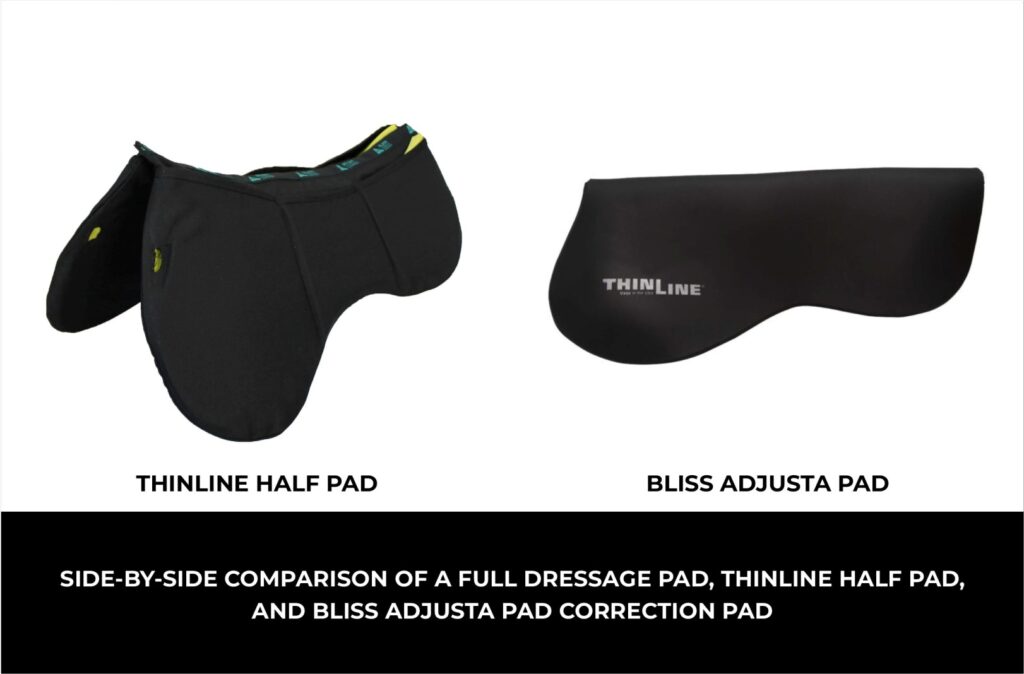
Half pads sit under the saddle panels only. Used for cushioning, shock absorption, or as part of a shimming system. The Thinline range is the benchmark for performance half pads, and Cheval Sport stocks three options covering different use cases:
- Thinline Trifecta Half Pad ($259.95) — the standard performance half pad. Provides significant shock absorption at minimal thickness. The most versatile option in the range for horses in regular work.
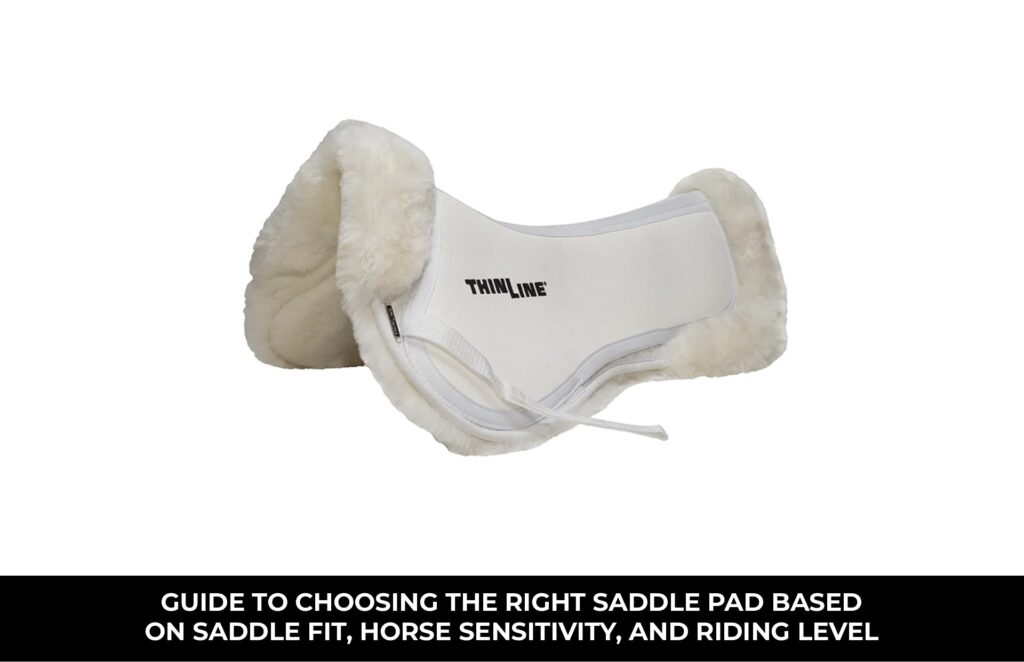
- Thinline Trifecta Half Pad with Sheepskin Rolls ($299.95) — adds natural sheepskin rolls along the front edge, which provide additional cushioning at the point where the front of the panel contacts the back. Useful for horses with sensitivity directly behind the shoulder.
- Thinline Trifect Comfort Sheepskin Half Pad ($399.95) — the full sheepskin version, combining Thinline shock absorption with full sheepskin contact. The premium option for horses with significant back sensitivity or those in intensive competition work.
Correction and Shimming Pads
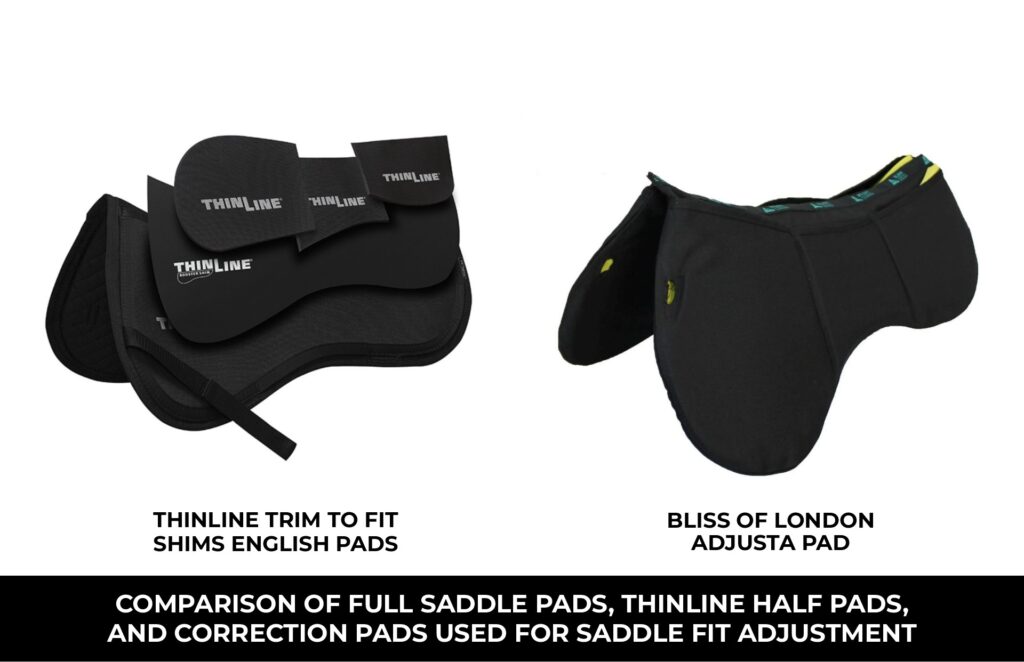
Shimming pads contain removable inserts that can be placed on specific areas of the pad to correct minor left-right or front-back imbalances in how the saddle sits. Two options worth knowing:
- Bliss of London Adjusta Pad ($199) — a correction pad designed with the Bliss saddle range. Allows targeted shimming to fine-tune saddle balance between professional fittings. Particularly useful for Bliss of London saddle owners managing a horse whose muscling is developing or changing.
- ThinLine Trim To Fit Shims — English Pads ($99.95) — individual shim inserts that can be trimmed to size and placed into compatible pads. The most flexible shimming option — used by saddle fitters to trial different corrections before recommending a full fitting adjustment.
A competition dressage rider in Victoria noticed her saddle was consistently sitting slightly left. Her fitter confirmed the horse had developed more muscle on the right side through intensive left rein work. Rather than refitting the saddle immediately, the fitter used ThinLine shims on the left side to rebalance the fit, with a full fitting booked for six weeks later when muscle development had progressed further.
Other Half Pad Options
The Kieffer Half Pad ($169.95) is a quality European option that pairs naturally with Kieffer saddles but works well with other leather saddles of similar construction. For riders wanting a budget-friendly riser pad to correct front-to-back balance, our Wintec Half Riser Comfort Pad Front ($74.95) is a practical starting point — though it should be used with guidance from a fitter rather than as a DIY fix.
Types and products covered. The question that actually determines which one to buy comes down to three things about your specific situation.
How to Choose the Right Saddle Pad for Your Horse
Match the Pad to the Saddle Shape
A dressage saddle needs a dressage-cut pad. A jumping saddle needs a jumping-cut pad. Using a square dressage pad under a jumping saddle creates bulk where the rider’s leg sits and can interfere with position.Your saddle pad should always work with your overall riding setup, not independently of it.
Do Not Over-Pad a Well-Fitting Saddle
If your saddle has been professionally fitted, a thin cotton or performance pad is all you need. Adding thickness disturbs the fit. The most common version of this mistake is using a thick half pad under an already-fitted saddle in the belief that more cushioning means more comfort. It usually means worse fit.
Match the Pad to the Horse’s Sensitivity and Work Level
A horse in light recreational work with a well-fitting saddle needs a basic cotton pad. A horse in intensive competition work, or one with a sensitive or previously injured back, benefits from a performance pad like our Thinline Trifecta Half Pad. The pad should match the demand on the horse, not the rider’s brand preference.
| Situation | Recommended Pad | Product at Cheval Sport |
| Well-fitting saddle, recreational work | Thin cotton shaped pad | Basic shaped dressage pad |
| Well-fitting saddle, competition work | Performance half pad | Thinline Trifecta Half Pad ($259.95) |
| Sensitive back or previous injury | Sheepskin performance half pad | Thinline Trifect Comfort Sheepskin ($399.95) |
| Minor saddle imbalance (between fittings) | Correction / shimming pad | Bliss Adjusta Pad ($199) or ThinLine Shims ($99.95) |
| Bliss of London saddle owner | Purpose-matched correction pad | Bliss of London Adjusta Pad ($199)[AN1] |
Saddle Pad Care — What Most Riders Do Not Do Enough
A pad that is not cleaned regularly accumulates sweat salts, bacteria, and dried skin cells. These cause rubbing, skin irritation, and can contribute to back soreness.
- Wash cotton pads after every second to third ride in warm weather. Every 5 to 6 rides in cooler conditions, if the pad dries completely between uses.
- Thinline pads should be rinsed and air-dried after each use. Machine washing on gentle with mild detergent is acceptable — avoid hot water, which degrades the material.
- Check the underside of your pad after each ride. Uneven sweat patterns are one of the first visible signs of saddle fit issues.
The underside of a saddle pad is a diagnostic tool. A pad showing dry patches directly behind the shoulder and under the back of the panel, with heavy sweat marks only at front and back, is showing a bridging pattern — the saddle is not making full contact in the middle. This is worth showing your saddle fitter.
Common Saddle Pad Mistakes Riders Make
- Using a thick saddle pad to fix a poor saddle fit
- Choosing based on colour instead of function
- Over-padding a correctly fitted saddle
- Ignoring sweat patterns after riding
- Using the wrong pad shape for the saddle
Conclusion
A saddle pad is part of the fit system — not an afterthought.
Choose the right type for your discipline. If you are unsure whether the issue comes from the saddle or the saddle pad, review your full setup step by step.
Match the thickness to your saddle fit, not your preference for cushioning. Use the sweat pattern on the underside as a diagnostic tool after each ride. And when your horse’s back changes — through conditioning, injury, or development — reassess both the saddle and the pad.
Explore the full saddle pad range at Cheval Sport and choose a setup that works with your horse — not against it.